Psyker — Generalist Developer on a Cyberpunk 2.5D Fighting Game Vertical Slice
- ▸ Delivered a complete vertical slice and trailer-ready build from scratch in approximately 5 weeks.
- ▸ Built the 2.5D movement framework, combat system, Niagara VFX, and full sound design — end to end.
- ▸ The vertical slice served as the basis for all public-facing marketing materials and trailer.
The Project
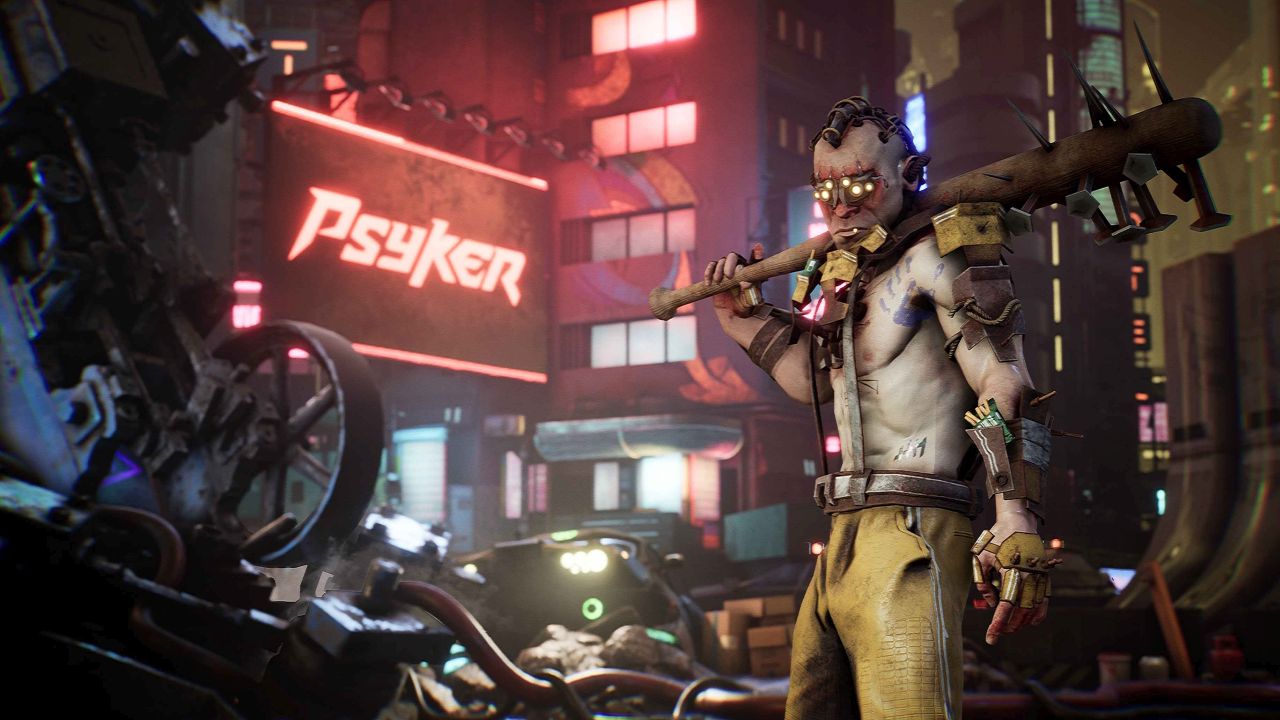
Psyker is a cyberpunk-themed 2.5D fighting game with Web3 integration, built on Unreal Engine 4. Set in a dystopian world where nanobot parasites have transformed residents of “Solana City” into biomechanically enhanced fighters, the game features multiple character classes, RPG-style stat systems, NFT-based customization, and game modes including PvE story, PvP arcade, ranked ladder, and an NFT wager system.
The contracted deliverable was a gameplay vertical slice and trailer, produced from scratch in approximately 5 weeks. That vertical slice went on to serve as the basis for the project’s public-facing trailer and marketing materials.
What Was Delivered
- Complete vertical slice in ~5 weeks — game framework, combat system, Niagara VFX, and full sound design
- Trailer-ready build that became the basis for all public-facing marketing materials
- Delivered all VFX and audio assets from scratch within the same timeline
- Standout procedural trash vortex VFX shipped as a hero environmental effect
My Role
I was generalist on a 4–5 person contractor team, working alongside a cinematics specialist, an abilities programmer, a 3D artist/animator, and an additional programmer. My responsibilities spanned multiple disciplines: game framework architecture, player character systems, real-time VFX, complete sound design, and environment art polish.
I set up the entire Unreal Engine 4 project from scratch — Game Mode, Game State, Game Instance, Pawn base class — establishing the framework that the rest of the team built upon. Beyond the architecture, I was the sole VFX artist and the sole sound designer on the project, creating all particle effects in Niagara and all audio assets from scratch in Ableton.
What I Built
Game Framework & Architecture
I established the complete UE4 project from zero. This included the Game Mode, Game State, Game Instance, and Pawn base class with spawn functionality — the foundation layer that every other system in the project depended on. Other team members built their features (abilities, cinematics) on top of this framework.
Camera & Movement
Side Camera System — Built a 2.5D side-scrolling camera that tracks the fight from a fighting-game perspective.
2.5D Plane-Constrained Movement — Implemented fighting-game-style locomotion constrained to a plane, with the ability to reposition laterally. This required custom movement logic — not a standard UE4 character movement mode.
Cutscene Manager
Built a cutscene management system handling transitions between cinematic sequences and gameplay, including pawn switching between cutscene pawns and player-controlled pawns.
Visual Effects (Niagara)
I created all real-time VFX for the vertical slice using an early version of the Niagara particle system:
Attack & Character VFX — Spark effects on attack impacts and cyborg damage effects, with distance-field-based particle collision profiled for accuracy.
Flying Car VFX — Background environmental effect for the cyberpunk cityscape. Required a dedicated optimization pass — profiling distance fields and tuning particle counts to stay within frame budget.
Procedural Trash Vortex — A physics-driven procedural particle system simulating swirling trash and paper debris in the city environment. This was a standout environmental effect and a notable technical achievement, built in an early Niagara version with fewer established workflows and less documentation.
Footstep VFX — Ground interaction effects tied to character locomotion.
Sound Design & Audio
I created every sound asset for the vertical slice from scratch using Ableton DAW, synthesizers, and curated sound libraries — then implemented all audio in-engine:
- Locomotion sound effects (footsteps, movement)
- Combat sound effects (hits, impacts)
- Finisher sequence audio
- Level ambience design
- Character voice SFX
This was a complete audio pass covering the full vertical slice, from environmental atmosphere to per-hit combat feedback.
Environment Art
Replaced and adjusted all graffiti, billboard, and decal textures throughout the game level as a polish pass for the trailer deliverable.
Key Challenges & Solutions
Building a full vertical slice in ~5 weeks: The entire prototype — framework, player systems, VFX, SFX, environment polish — went from zero to trailer-ready in approximately five weeks. This required sharp prioritization and the ability to switch between programming, VFX, sound design, and art within the same sprint. Each discipline had to reach a polished-enough state to hold up in the public-facing trailer.
2.5D movement on a plane: Fighting-game-style plane-constrained movement that still allowed lateral repositioning isn’t a standard UE4 character movement mode. I wrote custom movement logic to constrain the primary axis while allowing controlled side-to-side repositioning.
Early Niagara adoption: Working with an early version of Niagara meant fewer community resources, less mature tooling, and more reliance on first-principles problem solving. The procedural trash vortex system in particular required creative solutions for physics-driven particle behavior that weren’t well-documented at the time.
VFX performance optimization: The flying car environmental VFX exceeded frame budget on initial implementation. I profiled distance fields for particle collision and tuned particle counts and simulation complexity to bring it within target.
Tools & Tech
Unreal Engine 4 (Blueprints), Niagara Particle System, Ableton DAW, Synthesizers & Sound Libraries, Windows
Need a rapid prototype or vertical slice on a tight timeline?
Tell me what you're building and what you need. I typically respond within 24–48 hours.
Start a Conversation